City walls have turned urban environments into colorful screens, and artistic work with cultural narratives. Since their earliest applications in ancient cultures, to their contemporary forms in modern cities, the techniques of urban mural have undergone a great deal of development, changing with the development of society and artistic trends. This paper will examine the …
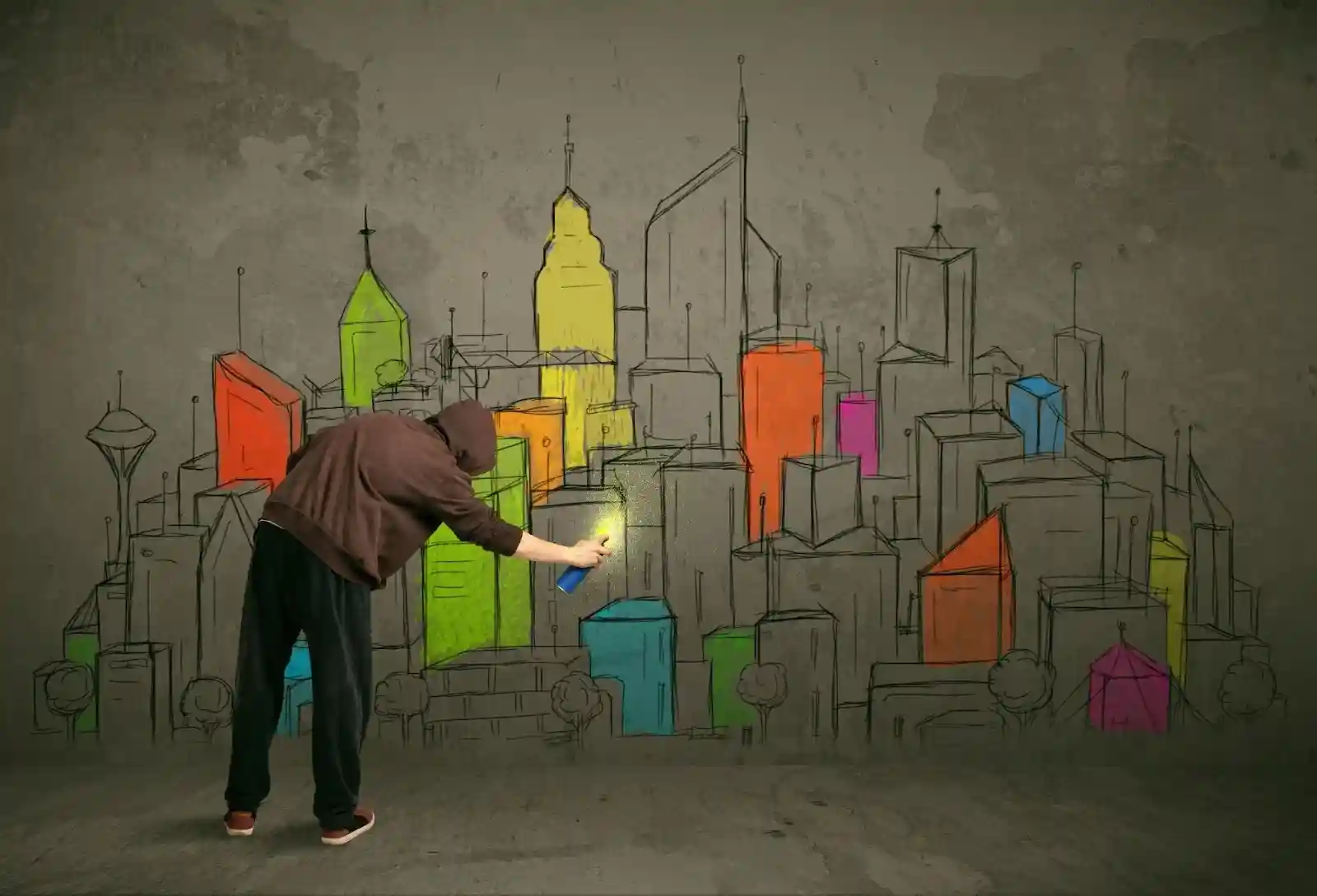

City walls have turned urban environments into colorful screens, and artistic work with cultural narratives. Since their earliest applications in ancient cultures, to their contemporary forms in modern cities, the techniques of urban mural have undergone a great deal of development, changing with the development of society and artistic trends. This paper will examine the background of street art, the modern methods of muralism, and the influence of murals in the city.
The Roots of Street Art
Street art can be traced back to the ancient times when people used to communicate through the use of walls. The origins of this form of expression are cave paintings, hieroglyphics and graffiti. Modern street art, however, started to emerge in the late 1960s and 1970s guided by the increase of graffiti culture in such cities as New York and Philadelphia.
The History of Graffiti Culture
Social and political instabilities contributed to the emergence of a new form of expression in the city, which was graffiti. During this period, such artists as Keith Haring and Jean-Michel Basquiat created their works in the streets commenting on such problems as inequality, consumerism and identity. Their work formed the precursors of what we currently consider as street art.
-
Professional opinion: According to art historian Dr. Gregory Sholette, graffiti and street art gave the marginalized a voice so they could interact with the rest of the population in significant manners. This is the spirit of street art being used as a means of social commentary.
The Development of Urban Murals
The street art movement expanded and the techniques of the artists increased. Murals started to be more sophisticated than simple tagging and graffiti and to adopt any style, theme, and medium. Nowadays, murals are frequently ordered to be put in the area of publicity, not only as a decoration, but also as a utility.
Important Methods of Contemporary Urban Murals
Stencil Art
Stencil art refers to an art that is made by cutting out shapes out of a resource and spraying paint on it. The method enables artists to recreate complex designs in a fast and effective manner. The mysterious British graffiti artist Banksy is famous with his stencil work that is an amalgamation of humorous and tragic social messages.
-
Real Life Story: The Girl with a Balloon by Banksy is an ideal representation of stencil art that conveys an emotional story in such a minimal and impressive piece of art.
Mosaic and Tile Murals
Mosaic murals are painted by gluing smaller pieces of glass, stone or tile in order to create elaborate patterns. It is an ancient technique, and has recently found a new follower in urban settings, with artists covering surfaces with color tiles in order to produce striking pieces of public art.
-
Example: The Tile Murals by the American artist, John Pugh, are a mixture of graffiti and the classic method of mosaic, which produces impressive images that capture the attention of the people that pass by them.
3D Murals
The emergence of 3D murals has enabled artists to challenge the perception and reality. These murals are sometimes made to cause optical illusions and make the walls appear to stretch out into the space or engage the beholder.
-
Vignette: The John Pugh and his style of trompe-l-oeil exemplifies the way, in art, that space and perspective can be bent by the artists to invite the spectators to enter the art.
Digital Murals
As technology has advanced, there has been the development of digital murals as a modern practice. Artists have the option of planning their murals using digital tools and then implementing them on the walls to plan their murals and also make colorful applications.
-
Real-Life Case: The Digital graffiti festival in Florida demonstrates how digital methods can be used to change urban spaces combining technology and conventional art forms.
How Murals are culturally important
Murals are not just a decoration, the murals are pieces of cultural art that show the identity and stories of the community they live in. They are historical records, which describe the nature of a location and its inhabitants.
Murals as Social Commentary
Most modern day murals address urgent social subjects, such as climate change or racial equality. Murals are effective agents of transformation because artists engage audiences through their art to start a dialogue and often compel them to act.
-
Professional Commentary: Muralist and activist, Judy Baca, says, “Murals can involve the populace in a conversation. They are able to subvert perceptions and an ownership of the community.
Effects of Murals on Urban Designs
The fact that murals have been incorporated in the design of the urban environment implies a lot about the way people view and engage with the environment. Murals are able to revive abandoned areas, boost community pride, and encourage tourism.
Revitalizing Urban Spaces
Cities worldwide have welcomed the use of murals as one of the ways of reviving urban streets. The Philadelphia Mural Arts Program is one of the initiatives that have turned blighted neighborhoods into cultural hot spots.
-
Real-Life Case Study: Miami, the Wynwood Walls is a good illustration of how a whole area can be transformed into an outdoor gallery, which artists and tourists can enjoy.
Improving Community Identity
Murals enable communities to have their individual identities, creating a sense of belongingness among the residents. Local artists tend to be inspired by the histories and narratives of their localities and make works that are close to the community.
The Future of Urban Murals
The methods and themes of a mural art will differ as the urban environment keeps changing. The development of social media gives artists an opportunity to communicate with more people, and the necessity of public art is bound to increase.
Embracing Sustainability
Sustainability also might become the way forward of urban murals in the future with artists employing environmentally friendly materials and processes. This transition does not only help to save the environment but is also an indication of increasing awareness of climate concerns in the art scene.
-
Research Insight: A study by the International Journal of Urban Arts indicates that mural art can be used to create environmental awareness and involvement in the community through sustainable practices.
Final Thought
The development of street art can be traced to the techniques of urban mural, representing the changes in society, cultural discourse, and artistic creative development. With murals decorating the walls of the cities all over the world, it becomes an indication of the strength that art has to turn spaces and interact with communities. Since ancient times to the contemporary practices, urban murals are still being used in inspiring, thought provoking and connecting people.
With the world of urban murals being colorful, it is important to see the narratives behind them and the society they represent. Whether that is stencil, mosaic or digital, these murals are a reminder of the human experience tapestry and the shared duty to conserve and protect our own culture. When the world is getting more and more divided, urban murals can be seen in the light of hope, unity, and creativity as a way of engaging all in the artistic discourse that shapes common spaces.